Enterprise Readiness
AWS Security & Enterprise Readiness
Get a clear view of where your software platform stands on security, which risks matter most, and what your team should do next.
Discuss this serviceWays to engage
Choose the kind of support your team needs.
AWS security architecture and enterprise-readiness assessment
Use this assessment when leadership needs a complete view of security across the platform. We review application architecture and trust boundaries; customer identity and operator access; data protection and tenant isolation; AWS account and network foundations; external dependencies and software delivery; and detection, incident response, and recovery. You leave knowing what is working, where meaningful risk remains, and what your team should consider next. When applicable, we can also assess the platform against specific enterprise, regulatory, or compliance requirements.
Ongoing security design review
Use ongoing review when your team needs principal-level security judgment as the platform changes. We review important feature designs, architecture changes, launch plans, and enterprise commitments before implementation. We identify risks, make tradeoffs explicit, and present practical options while there is still time to change direction.
Business outcomes
What changes for the business.
The work happens in the architecture, but the result is a platform the business can defend, engineering can improve, and enterprise customers can trust.
Clarity about material risk
Leadership understands which exposures matter, what they could mean for customers and the business, and where security investment will do the most good.
Enterprise confidence
The company can respond to customer, regulatory, and compliance scrutiny with a defensible view grounded in how the platform and its controls actually work.
Engineering momentum
Security decisions fit the platform and the way the team operates, reducing avoidable rework, unnecessary complexity, and recurring operational burden.
How the engagement works
From a comprehensive review to clear, actionable security priorities.
01
Understand what's in scope and what success looks like
We start with the security outcome your business is working toward — the commitment, launch, or requirement driving the review — then establish the systems and components in scope, how the platform is used, the threats it faces, and any customer, regulatory, or compliance requirements it must satisfy.
02
Examine security end to end
We examine the application, AWS environment, and software delivery process to understand how identity, access, data protection, network paths, dependencies, detection, and recovery work together in practice.
03
Challenge trust and failure assumptions
We test trust boundaries, privilege paths, detection and containment assumptions, recovery behavior, and ownership to identify credible ways a security event could reach customers or the business.
04
Review findings and align on priorities
We present the material risks, explain their potential impact, and discuss reasonable mitigation options and tradeoffs with leadership and engineering. Your team determines which risks to address and which direction the architecture plan should take.
05
Turn priorities into an engineering-ready plan
We translate the direction your business chooses into sequenced architecture decisions and design guidance, accounting for engineering effort, dependencies, and applicable requirements so your team can carry the work forward.
What you receive
Useful outputs, not a consulting black box.
Leadership leaves with a clear view of material security risk. Engineering leaves with an actionable architecture plan based on the priorities and direction the business chooses.
Featured output
An engineering-ready security architecture plan
Translate the priorities and direction your business chooses into sequenced architecture decisions your engineering team or delivery partner can execute. Each priority explains what should change, why it matters, the recommended design direction, important tradeoffs and dependencies, and how the team can verify that the risk was addressed.
A current-state security assessment
See how security works across the application, AWS environment, and software delivery process today, including what is working well and where material risk remains.
A material risk and decision register
For each material finding, document the conditions that make the risk credible, existing protections, potential customer and business impact, priority, mitigation options, agreed direction, and any decision leadership or engineering still needs to make.
Applicable enterprise and compliance requirements mapping
When applicable, connect customer security expectations and requirements from SOC 2, ISO 27001, HIPAA, PCI DSS, or another defined objective to the assessment findings, proposed controls, and evidence those controls should produce.
Why choose 2birds
Principal-level judgment grounded in operating reality.
- 01The engagement is led by former AWS principal engineers. Senior judgment stays involved from the initial review through the final design guidance.
- 02We follow credible paths to customer and business impact across the application, AWS environment, and software delivery process—not isolated findings from a benchmark or automated scan.
- 03We present maintainable control options and make their tradeoffs explicit across protection, reliability, operational burden, customer experience, and engineering effort.
- 04Our recommendations are not shaped by a remediation project or preferred tool. We work alongside your existing team and leave the reasoning, decisions, and architecture plan with them.
Technical scope
Security across the software platform.
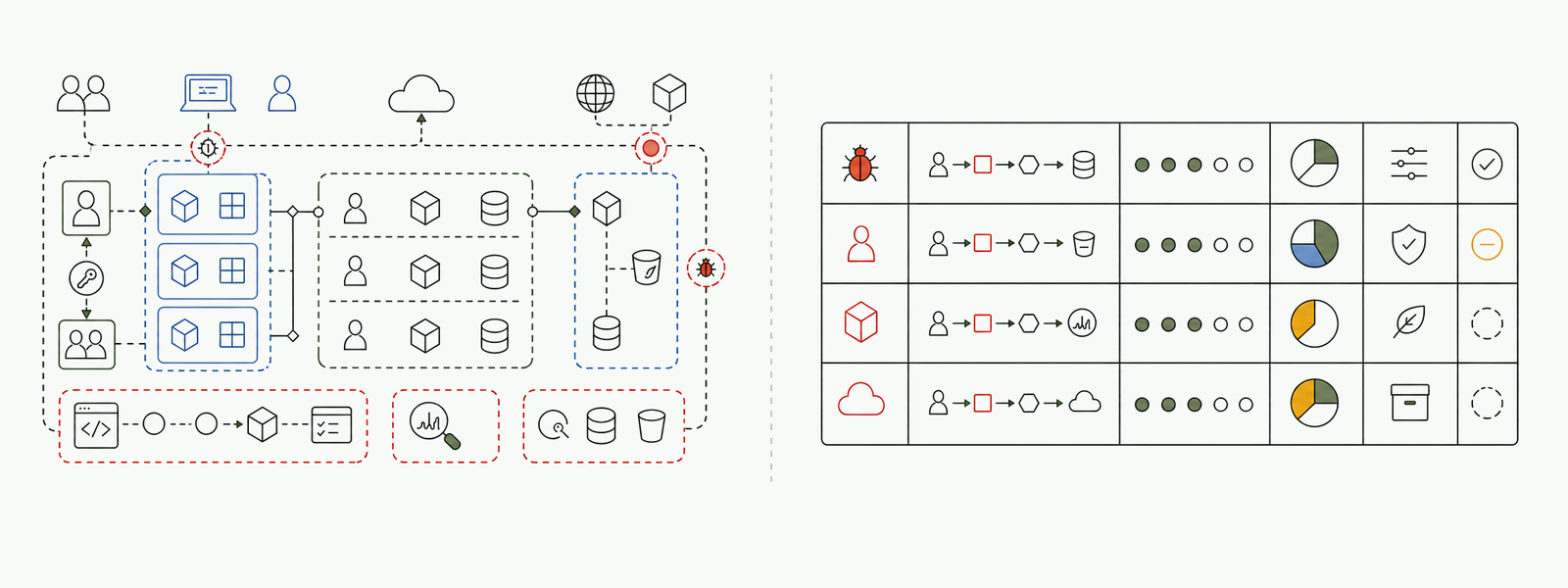
We examine how users and operators access the platform, how data and code move through it, how services and dependencies interact, and how the system detects, contains, and recovers from security events.
- Application architecture and trust boundaries
- Customer identity, authorization, and tenant isolation
- Operator access, AWS accounts, IAM, and privileged workflows
- Data protection, encryption, keys, and secrets
- Network exposure, service communication, and external dependencies
- Software delivery, supply-chain risk, and vulnerability management
- Logging, detection, incident response, and recovery
- Applicable enterprise, regulatory, and compliance requirements and evidence
Start with the decision in front of you